Strategic Sectors & Industrial Policy
Special Reports | Autumn 2026 Edition
The Business Case for Steel: Why Decoupling Energy Markets Is Vital for Europe's Industrial Survival
Axel Eggert on competitive energy and the investment case for Europe's low-carbon steel.
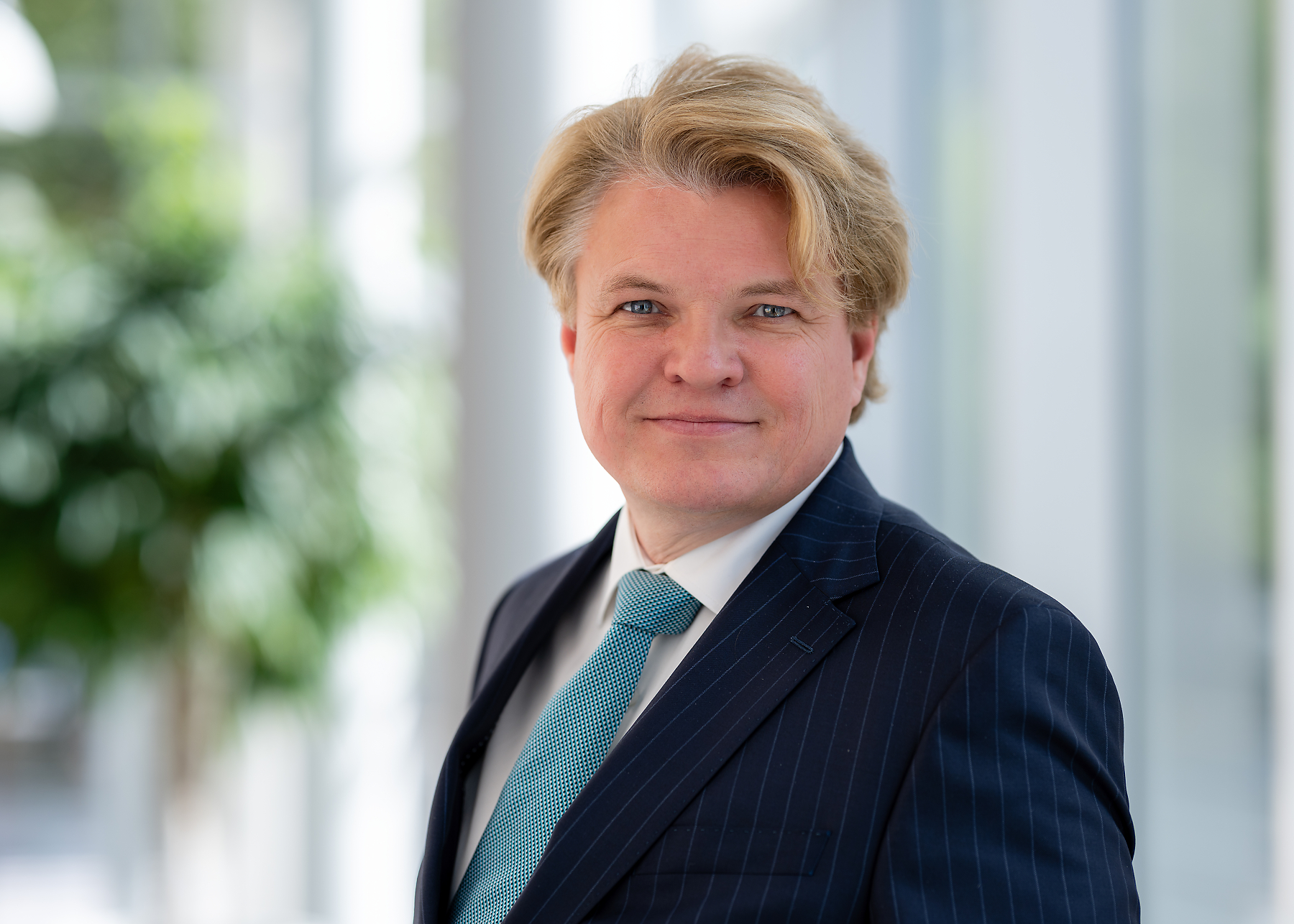
With Axel Eggert, Director-General of EUROFER - The European Steel Association
By Aida Iordache · October 26, 2026

Europe’s heavy industry is navigating a critical juncture where technology is no longer the bottleneck, but the economic architecture surrounding it is. While European steelmakers stand ready to deploy billions into low-carbon infrastructure, the viability of these investments remains heavily compromised by volatile energy pricing and regulatory asymmetries. The transition to green production models cannot succeed in a vacuum; it requires a bulletproof investment framework that ensures clean steel is actively manufactured - not merely consumed - within the European Single Market.
To dissect these systemic pressures and the operational friction surrounding the active phases of the Carbon Border Adjustment Mechanism, The Gazette sat down with Axel Eggert, Director-General of EUROFER.
As the leading institutional voice for the European steel sector, Eggert maps the urgent prerequisites for global competitiveness, the necessity of structurally decoupling fossil-fuel and electricity prices, and the immediate regulatory safeguards required to protect heavy industry from energy insecurity during this transition cycle.
The Interview · 1
The Gazette: With European manufacturers facing demanding emission reduction targets, what do you see as the primary structural or capital hurdle for the steel sector transitioning to green production models without losing global market competitiveness?
Axel Eggert: The main challenge is no longer the technology itself, but creating a viable business case for investing in low-carbon steel production in Europe. European steelmakers are prepared to invest billions in new technologies, with over 60 major low-carbon projects already planned or underway. But these investments depend on several conditions coming together: abundant low-CO2 energy carriers - particularly electricity and hydrogen - at internationally competitive prices; the necessary energy infrastructure and infrastructure for CO2 transport and storage; effective protection against carbon leakage; and strong lead markets for low-carbon steel and steel-intensive products.
None of these elements works in isolation. Europe needs to create the whole investment framework that allows low-carbon steel to be produced, not simply consumed, in Europe. The transition requires investment certainty: competitive energy, infrastructure, a level playing field and sufficient demand for low-carbon products.
The Interview · 2
The Gazette: As the Carbon Border Adjustment Mechanism (CBAM) transitions into its active phases, what are the main operational challenges for EU importers regarding emissions data collection and verification throughout complex international supply chains?
Axel Eggert: For steel, the key operational challenge is ensuring that the emissions of imports are accurate, verifiable and resistant to circumvention across increasingly complex global supply chains. CBAM must deal effectively with practices such as resource shuffling and ensure that emissions embedded in relevant inputs are properly captured. Otherwise, highly carbon-intensive production can appear cleaner on paper than it really is.
At the same time, implementation must be practical and administrative procedures streamlined. The objective should be a system that is workable for operators, but rigorous enough to ensure that imported steel genuinely faces a carbon constraint comparable to European production.
The Interview · 3
The Gazette: Given the fluctuating energy price landscape in Europe, what immediate regulatory safeguards or structural reforms are essential to protect heavy industry from energy insecurity during this transition cycle?
Axel Eggert: Affordable electricity is now one of the most urgent conditions for keeping steel production and decarbonisation investment in Europe. Industrial electricity prices need to move towards €50/MWh across the EU, backed in the short term by effective relief for energy-intensive industries. This should include targeted network-cost relief, continued and strengthened compensation for indirect ETS costs, and better access to long-term PPAs.
But short-term relief is not enough. Europe also needs to address the structural problem in its electricity market. The more fundamental question is whether Europe can continue allowing fossil-fuel generation to set electricity prices for industry as fossil-fired power plants remain an important part of the EU energy mix. Alternative market-design models capable of structurally decoupling fossil-fuel and electricity prices should now be properly assessed.
Europe needs an electricity market capable of delivering predictable, low-carbon power at internationally competitive prices. Without that, electrification risks increasing Europe’s competitive disadvantage rather than solving it.
The Brief
Brussels, decoded, every morning. What happened, what it means, one good dry joke.